Rewind to the beginning of the year and Europe looked set fair to build on the progress made in 2025. It had weathered the tariff storm well, so much so the Eurozone is estimated to have grown 1.5% in 2025, according to the European Commission (+1.2% had previously been pencilled in).
The 2025 upgrade was no one-off either. In December, the European Central Bank (ECB) upped its 2026 growth forecasts for the Eurozone economy to 1.2% from 1%. And the bloc was (and continues to be) set to enjoy a huge fiscal boost in the years ahead courtesy of a ramp-up in defence and infrastructure spending. There was good news on the inflation front too with prices firmly back under control after spiking higher in 2022 following the Russian invasion of Ukraine and tracking comfortably lower than US and UK equivalents for the foreseeable future. What was not to like?
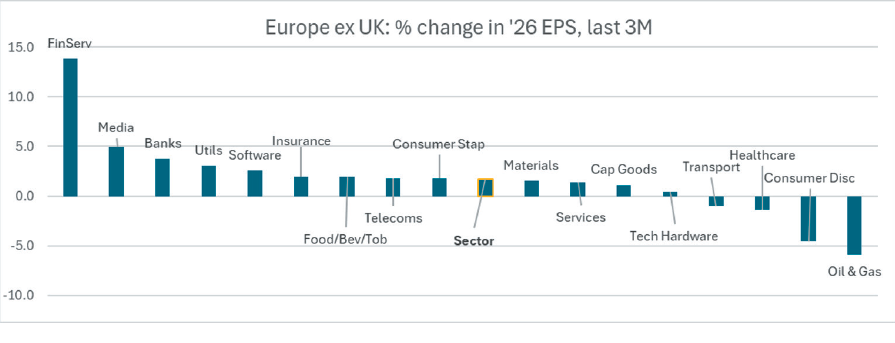
Now, if there are lessons to be learned from the last few years then ‘never take anything for granted’ and ‘expect the unexpected’ would surely feature high in the rankings— think the Covid-19 pandemic, the Russian / Ukrainian conflict, US trade tariffs, etc. Cue the launch of the US and Israeli joint attack on Iran on 28 February. With the conflict just days old, the devastating human loss and destruction are sadly there for all to see. Not so the impact on the global economy. Here the length and severity of the conflict will be key. It goes without saying, the sooner hostilities come to an end, the sooner global economic activity returns to normal. And if it does, one sector in particular is well-placed to benefit more than most from the positive narrative surrounding the Eurozone economy due to the central role it plays in any economy—banks.