Search

3 unknowns of decumulation

Date: 04 February 2026

7 minute read

When decumulation conversations start with our clients, this can signal the end of the accumulation journey, and the start of the most critical phase of a client’s investment and planning journey.

As financial advisers, you have accepted the burden of responsibility: ensuring your guidance and stewardship of the client’s investments and planning needs will now match the dreams and aspirations that have become the welltrodden path towards the new reality when work is no longer the priority.

Decumulation is about embracing possibilities. It is the stage where your client’s hard-earned investments begin working for them and the lifestyle and aspirations you have jointly planned for begin. Whilst the future brings its unknowns, thoughtful and considered choices today can create confidence for the years ahead.

Contracting with clarity

A withdrawal policy statement can be a vital tool in ensuring clear understanding for the client around how decumulation will work for them. This formal document sets out:

  • the parameters around income solutions
  • the order of asset usage
  • the risk parameters
  • review procedures, and
  • management of unforeseen events around potential spending needs or market influences.

Symbiosis between financial planning and investment management can contribute to better client outcomes in a clear, concise and joined up way.

It will also play a huge part in mitigating the influences of the three unknowns around decumulating assets for any purpose: longevity, investment influences and spending needs. These are factors that can prove challenging to plan perfectly for in advance.

Longevity

A long duration of life can only be planned for based on averages and probabilities. Mortality tables go back as far as the 17th Century, when John Gaunt created one of the first life tables and Edmund Halley developed the first formal survival tables. There have been many evolving iterations on the theme, but the premise remains the same: these tables are used to compute life annuities.

The average mortality rates for both men and woman from age 65 currently sit at 83.7 and 86.2 years respectfully.*

*Source: National life tables – life expectancy in the UK - Office for National Statistics 2022-2024

How can we plan against an average, without factoring in the individualistic nature of a client’s life journey?

Plan too long and you risk leaving too much of the client’s investments unenjoyed; plan too short and there could be challenges funding a future with an inability to correct with new investments.

Investment influences

Investment influences encompass three factors that can impact your client’s investments.

1. Market returns can look at past years; however, tomorrow is a promise to no one. How can you model against what world leaders may say or do that can affect world trade policy, heighten tensions between countries and impact investment performance? This can create sequence risk events and cause negative pound cost averaging at a time when the ability to correct any missteps is limited due to both timing and available assets. Negative pound cost averaging occurs when regular withdrawals from a portfolio during periods of market weakness make it harder for the portfolio to replenish capital when markets improve.

Negative pound cost averaging occurs when regular withdrawals from a portfolio during periods of market weakness make it harder for the portfolio to replenish capital when markets improve.

2. The UK aspires to keep annual inflation to 2%, however, we have not achieved this figure since 2021. High inflation erodes purchasing power, creates pressure on the value of savings and means increasing levels of risk may need to be considered, just to keep investments sustainable for clients at a time when there is limited scope to generate income beyond what their investments provide. Beyond performance, high inflation may mean more investments will need to be cashed in to maintain the client’s lifestyle.


3. Tightening taxation policy within the UK, specifically targeting savings and investments, has become a real challenge in wealth management, and continues to provide uncertainty at a time when planning needs clarity and surety. The pain of fiscal drag on frozen allowances for income and death taxes cannot be understated. Add to this the erosion of allowances for both dividend and capital gains, the erosion of the benefits of both Business and Agricultural Property Relief, and of course the upcoming changes to unused pensions – all of which can lead to corrections, panic planning and, potentially, for decumulation plans to be derailed.

Spending needs

Cash flow modelling and regular reviews can play an important role when considering spending needs, but what is the reality?

The individual nature of our clients means that any decumulation strategy is unique to them. By their very nature, unforeseen events are impossible to model, and whilst ‘what if’ scenarios that demonstrate what could happen can be deployed, can you factor these into the client’s plan with any degree of accuracy?

Also factor in the multi-layered approach to spending needs. Compare, for example, the more active parts of spending that may occur early in a decumulation strategy, with the less active and even care needs towards the later stages. Health, longevity and investment influences will also play a big part in the timing of such events and may end up baring little resemblance to the client’s reality.

The silent dangers in retirement: portfolio risk & volatility drag

When clients generally think about risks in retirement and managing their assets, it is through the lens of potential expenditure and needing money for pressure points that may arise, such as home repairs or care costs, and then planning accordingly. The silent dangers in retirement that need to be considered centre around portfolio risk in withdrawals and volatility drag.

With regards to volatility drag, it is very simple. When investments fall in value, they have to work harder than the fall to return to their original value - the larger the fall, the bigger the performance has to be to recover.

In the example below, a client has investments totalling £100k and experiences a fall of 10% to £90k. To recover the lost ground fully, the investments must now perform at 11% just to return to their pre-fall state. This is further compounded as the size of the fall increases as evidenced below.
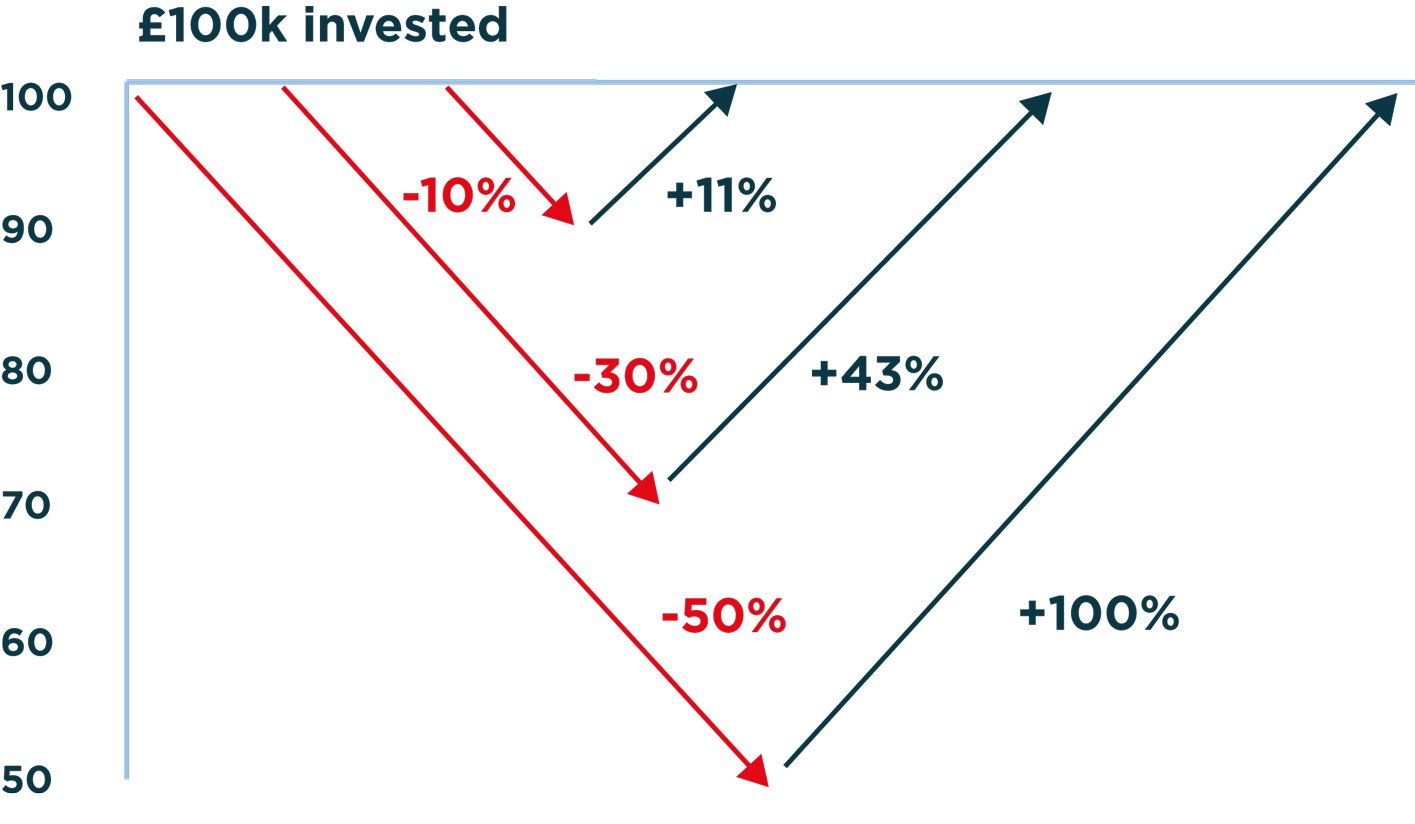
 

Chart showing £100k invested


We then must consider the sequencing and negative pound cost averaging risk of withdrawals during periods of volatility.

Sequence risk is all about the timing of negative performance in investments, and the order in which performance occurs. If negative performance happens early in the decumulation phase, this can be worse than if losses happen later in retirement, when compounded growth has lessened the impact. Negative pound cost averaging compounds the effect of sequencing risk when withdrawals are taken during volatile or negative market performance.

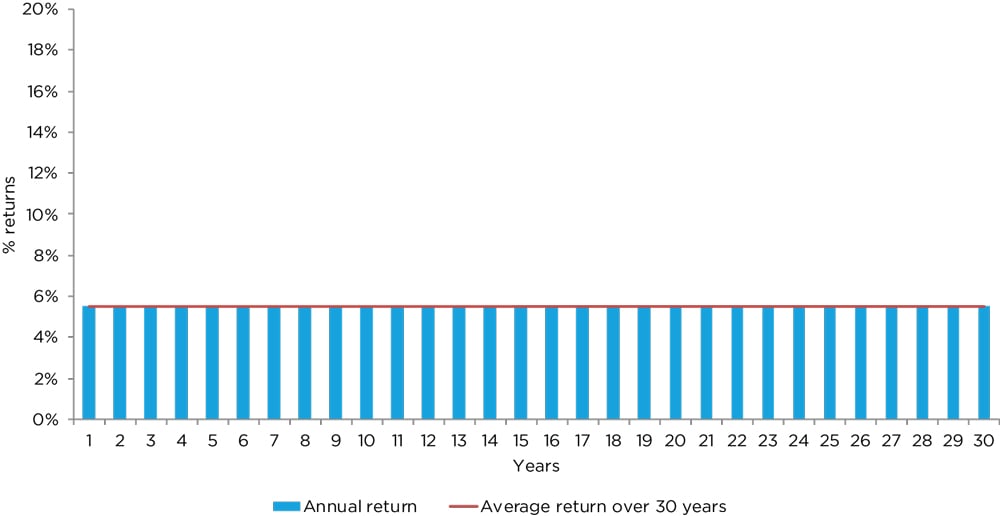
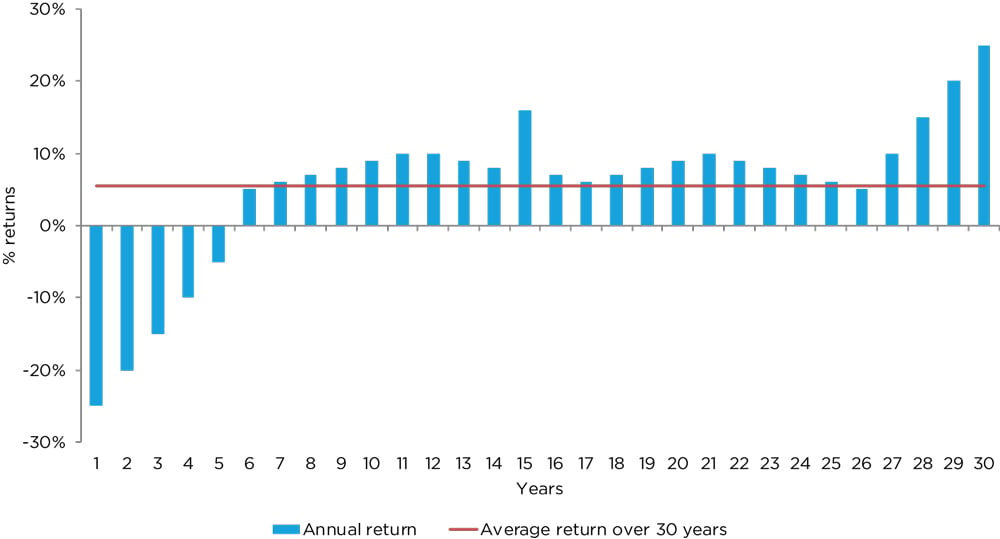
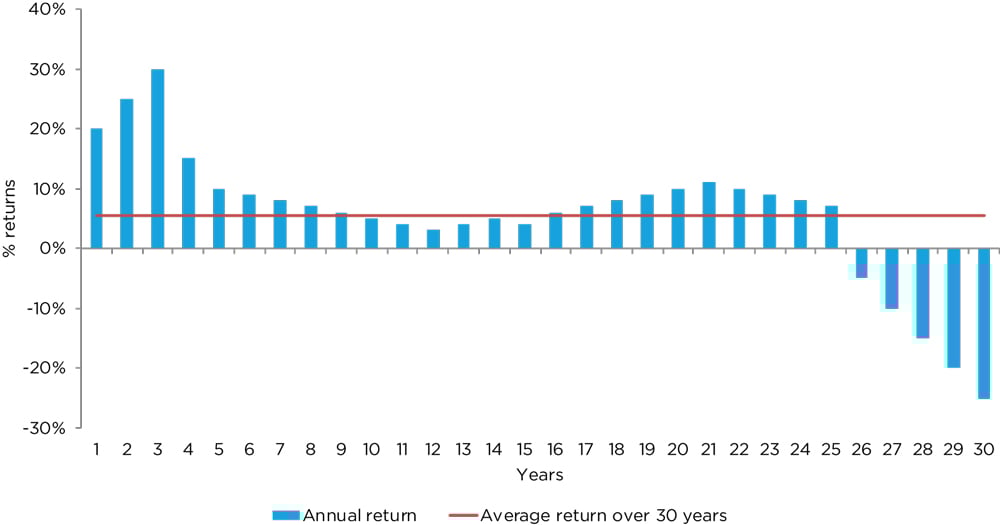
In the example below we have modelled all three scenarios with an average market return of 5.5% over 30 years, on a £1m portfolio. If you consider the bad start, strong finish, coupled with regular withdrawals of £40,000, the client’s portfolio never recovers.


Chart 1: Strong start, bad finish = £2,788,954

Chart 1: Strong start, bad finish


Chart 2: Never a negative year = £2,086,532

Chart 2: Never a negative year


Chart 3: Bad start, strong finish = -£1,480,096

Chart 3: Bad start, strong finish

For illustrative purposes only.


In theory the bottom graph example should never occur, thanks to the vigilance of strong investment management and financial planning, coupled with a robust emergency fund that could allow a reduced level of income during market turbulence.

Managing risks is about more than being cautious and having robust emergency funds. It requires insight, foresight into emerging risks and strong planning and wealth management. Planners and investment managers are integral to ensuring the responsibility and stewardship of the clients.

Supporting your clients in decumulation

Quilter Cheviot’s Tailored Income Service delivers a dynamic, actively managed investment solution that helps to provide a sustainable income for your clients.

With an understanding of your client’s income needs, tax position and investment objectives, your investment manager will work with you to tailor the most suitable approach, whether using a two-pot approach, taking natural yield or encashment. Each approach uses one, or a combination of our Discretionary Portfolio Service (DPS) models and is regularly reviewed to ensure their investments remain on track.

Talk to your local business development manager today to find out how the service can help you.

Talk to us today Talk to us today

The value of your investments and the income from them can fall and you may not recover what you invested.